
Why Is My Refrigerator Not Cooling?
You reach for a cold drink, and it's barely cool. The milk smells a little off, and the lettuce you bought two days ago is already going limp. When you have a refrigerator not cooling, everything inside is on a clock, and the first thing you want to know is whether you're dealing with a simple setting or a part that has failed.
Most of the time, the answer comes down to airflow and heat. Your refrigerator stays cold by moving cold air from its coil into the compartments and pushing the heat it removes out into the room. When something blocks that air, lets warm air leak in, or keeps heat from escaping, the temperature starts to creep up. Some of those causes take a few minutes to fix yourself. Others mean a fan, defrost part, or control has failed, and that's where a technician comes in.
Common Causes of a Refrigerator Not Cooling
Before you start, put an appliance thermometer on a middle shelf. The display only shows what the refrigerator is set to, not what it's actually holding, and you're aiming for 40°F or below, which is the FDA's food safety line. Keep the door closed as much as you can while you work. An unopened refrigerator holds its cold for about four hours, which gives you time to figure out what's going on.
The causes below run from the simplest to the most involved. Start at the top, because a refrigerator not cooling often turns out to have a cause in the first few sections.
1. A Power Issue or Demo Mode
A lit interior doesn't always mean the cooling system is running, so start by making sure the refrigerator is really getting power. If you can see the outlet without moving the refrigerator, check that the plug is fully seated, then look for a tripped GFCI outlet or breaker, especially after a storm or power outage.
If the power checks out, look at the control panel. Many refrigerators have a showroom setting, often called demo mode or cooling off mode, that keeps the lights and display working while the compressor stays off. It can get switched on during delivery or by a curious child pressing buttons. On Samsung models, a display that reads "OF OF" or "OFF" is the giveaway. Your owner's manual lists the button combination to turn it off.
2. The Temperature Setting Was Changed
If the power and mode look right, the setting itself is the next suspect. Controls get bumped more often than you'd think, especially dials inside the fresh-food section that sit right where groceries slide in. A setting of 37°F for the refrigerator and 0°F for the freezer is a good starting point for most models.
If you do adjust it, give the refrigerator a full day before you judge the result. Temperatures take about 24 hours to settle, so checking an hour later will only tell you it hasn't caught up yet.
3. Blocked Vents or an Overloaded Fridge
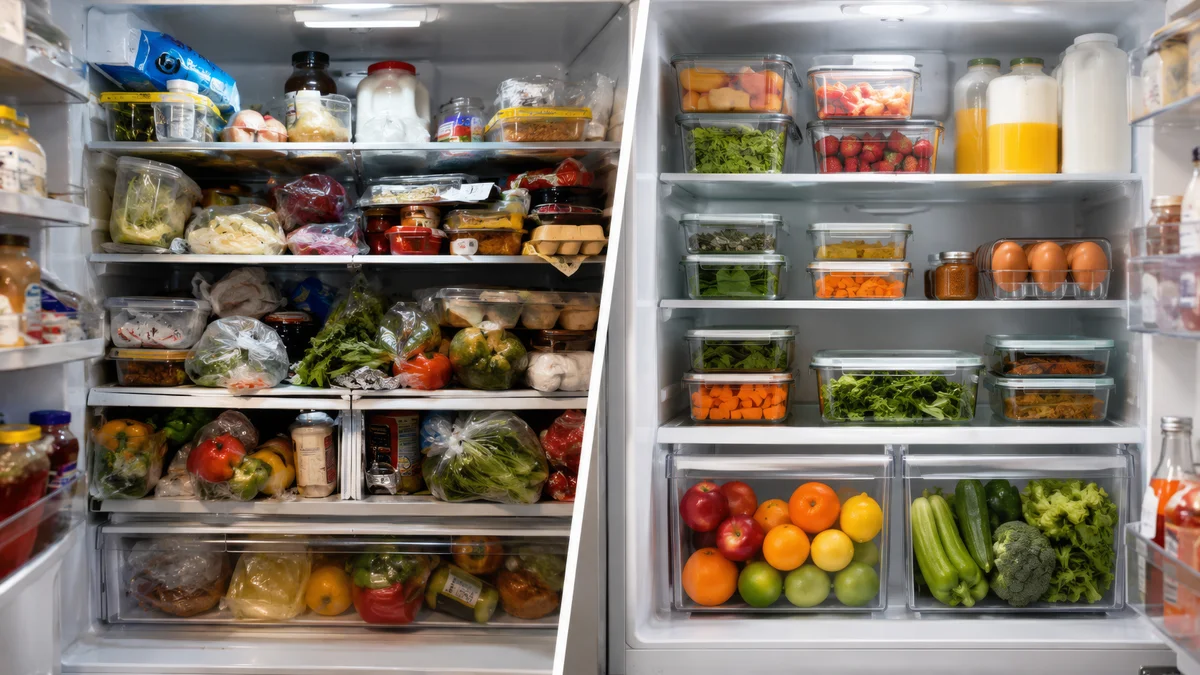
When the setting is right but some shelves feel warmer than others, look at where the cold air is supposed to go. In most refrigerators, it flows into the fresh-food section through vents, usually from the freezer side. A tall container or a stack of leftovers pressed against a vent stops that air from circulating, so the shelves farthest from it warm up first.
Move items away from the vents and leave a little space between them so the air can travel. If you just unloaded a big grocery run, that may be the whole story. A full load of room-temperature food can take about a day to cool back down.
4. A Worn or Dirty Door Seal
If the inside looks fine, check how well the door seals. The rubber gasket around the door keeps warm kitchen air out, and when it gets dirty, stiff, or torn, warm air sneaks in every time the refrigerator runs. The refrigerator works longer to make up for it and still can't hold temperature. Condensation along the door edge is often the first sign.
A simple test tells you a lot. Close the door on a dollar bill and pull it out gently. You should feel some drag. If it slides out freely, that part of the seal isn't doing its job. Often, wiping the gasket with warm, soapy water is enough to get it gripping again. If it's torn, warped or pulling away from the door, it needs to be replaced.
5. Dirty Condenser Coils
When cooling fades slowly over weeks instead of failing overnight, dirty condenser coils are a likely reason. Those coils are where your refrigerator gets rid of the heat it pulls from inside, and on many models they sit behind the front grille near the floor. Once they're coated in dust and pet hair, that heat has nowhere to go, so the refrigerator works harder and cools less.
Most homes don't need to clean them often, but houses with pets, heavy kitchen traffic or construction dust should check them every three to six months. If the coils are easy to reach from the front, unplug the refrigerator and vacuum them gently. Our guide explains how to clean the coils safely. If they're behind the unit, leave them for a technician rather than pulling the refrigerator out.
6. A Failed Evaporator Fan or Stuck Damper
When the freezer stays cold but the fresh-food side keeps warming up, the evaporator fan is one of the first things we check. That fan lives in the freezer, and its job is to pull air across the frozen coil and push it into both compartments. If it slows down or stops, the freezer still stays fairly cold because it sits right next to the coil, but the refrigerator slowly loses its supply of cold air. On many models a small damper controls how much air crosses over, so a damper stuck closed causes the same pattern.
You may also notice that the fan has gone quiet or started squealing, and that the vents in the fresh-food section push little or no air. Testing the fan and damper means working with live electrical parts behind the freezer panel, so this is the point to call a technician.
7. A Defrost System Failure
If cooling faded over several days and you can see frost or ice building on the freezer's back panel, the defrost system is the likely cause. Frost-free refrigerators melt frost off the evaporator coil on their own several times a day. When a defrost heater, thermostat or control fails, the frost keeps building until it chokes off the airflow, and you end up with a refrigerator not cooling even though the compressor is still running.
It's tempting to defrost the freezer yourself, but we recommend against it. Melting the frost erases the evidence a technician uses to find which part failed, and the problem comes right back. Keep the doors closed and schedule a diagnosis instead.
8. Condenser Fan, Compressor or Control Problems
When nothing is cold at all, or you hear repeated clicking from the bottom of the unit, the problem usually sits deeper in the cooling system. The condenser fan keeps the compressor and coils from overheating, so when it stops, cooling drops off quickly. A compressor that won't start, a failed start relay or a faulty control board can shut cooling down entirely.
These are the most complex causes on the list. They involve high-voltage components and, in the sealed system, pressurized refrigerant. An experienced technician can tell whether you're looking at a more straightforward fan or relay repair or a larger sealed-system problem, and whether the repair makes sense for your refrigerator's age and condition.
When to Call for a Refrigerator Not Cooling
If you've worked through the simple checks and the thermometer still reads above 40°F a full day later, it's time for a professional diagnosis. Call sooner if you see frost on the freezer's back panel, the door gasket is torn, or you hear grinding, buzzing or repeated clicking. While you wait, keep food safety in mind: the FDA advises throwing out perishables like meat, dairy, eggs and leftovers that have been above 40°F for four hours or more.
Our technicians start by diagnosing the cause, then explain what failed and what the repair involves before any work begins. Learn more about our refrigerator repair service, or contact us for appliance repair in Augusta, GA. We also provide appliance repair in Athens, GA.
Quick Answers
Why is my freezer cold but my refrigerator warm?
The fresh-food section usually gets its cold air from the freezer side. When the evaporator fan fails, a damper sticks, or frost blocks the air path, the freezer stays cold while the refrigerator slowly warms up.
How long does a refrigerator take to get cold?
Plan on about 24 hours for a newly installed refrigerator, or one that was just reset or restocked, to reach a stable temperature.